
INTRODUCING
Dr. Tareq Tarabeih
Ph.D 2014, M.Sc 2009
Former Ph.D Student 2024
Email: tarek.tarabeh@gmail.com
Developing Effective Peptide Antibiotics Using Under-Represented Sequences

Abstract:
In light of the power of genomics and computational biology, our group developed a new strategy of proteomic analysis called Reverse Bioinformatics, a computational method able to detect short peptide sequences that are rarely present or are totally excluded from the cell proteome, revealing the existence of Under-represented sequences (URS). The URS’s effect was examined in vivo in genetically modified Escherichia Coli (E.coli) BL21, able to express proteins with embedded URSs in a controlled manner. The expression of URS-protein led to a significant reduction in ribosomal activity, followed by cell damage and death, exhibiting irreversible inhibition of protein synthesis.
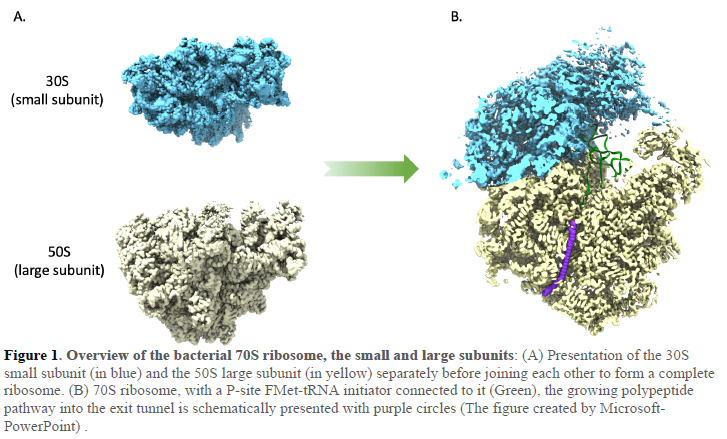
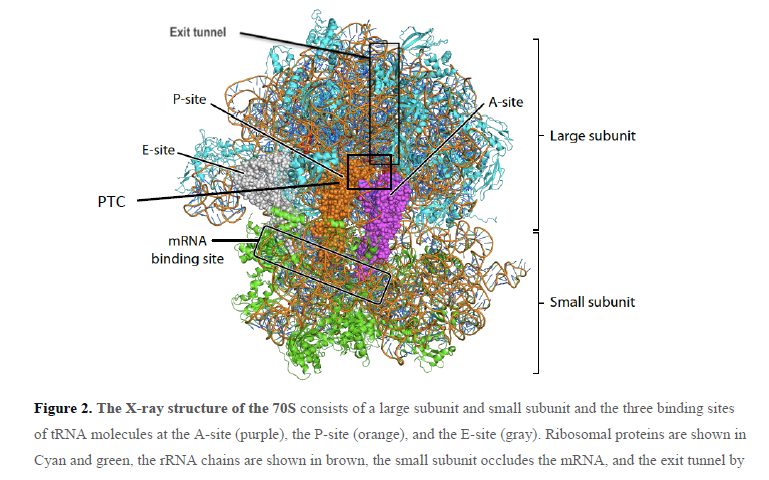
Thus, it can be suggested that peptidyl compounds based on these sequences are potential ribosomal inhibitors [1]. Two URSs that were shown to cause such inhibition in E. coli BL21 are the CMY and CMYW sequences after they were embedded into genes of large proteins in different locations [1]. Reverse Bioinformatics suggest that CMY and CMYW sequences are found to be also URS in Salmonella [1]. In this research, we have developed novel ribosomal antibiotics for pathogenic E. coli and Salmonella based on CMY and CMYW sequences. We designed synthetic short peptides of 5-9 Amino acids (AA) containing the URS sequence CMY or CMYW. Bacterial growth was strongly inhibited when the cultures were exposed to the synthetic URS peptides. In this study, we will show the biochemical challenges we have faced and provide insights on developing and optimizing peptidyl compounds for antibiotic use. To understand more about the inhibition mechanisms caused by the URSs CMY and CMYW at atomic resolution, we determined the structures of URS-70S Ribosome complex from E.coli BL21 and Salmonella enterica serovar Typhimurium (STM) by high-resolution Cryo-Electron Microscopy to 2.80Å, revealing the binding site of the URS peptide in the ribosome. The binding site of the URS-peptide was found in the large subunit (LSU) within the upper section of the exit tunnel.
Structural analysis suggests that the stalling mechanisms involve direct interactions between URS-peptide chain and the ribosomal tunnel elements A2058, A2059, A2062, A2586, U2609, C2610, close to the peptidyl transferase center
(PTC), as well as A751, A752 close to the constriction region, and the flexible loops of uL4 and uL22 at the constriction region. Further analyses also suggested that the peptide interferes indirectly with the functions of highly conserved nucleotides of the 23S rRNA chain, altering the PTC geometry and resulting in ribosomal stalling.
Based on the results presented in this research, we believe that the URS antibiotic development method can be a new approach that will allow us to develop a significant number of peptidyl antibiotics able to target highly conserved sites on the ribosome, customized for specific organisms, which can provide a new way to fight against bacterial resistance.
Read MS.c Thesis
Read PhD Thesis
Avital's Linkedin Profile